A Loose Hem Thread and a Lighter: What the $15 Polo Ralph Lauren White Polo Is Actually Made Of
The listing calls the fabric both cotton and polyester. We ordered the $15.37 white polo, measured it, washed it five times, and burned a loose hem thread to see which claim the cloth backed up.
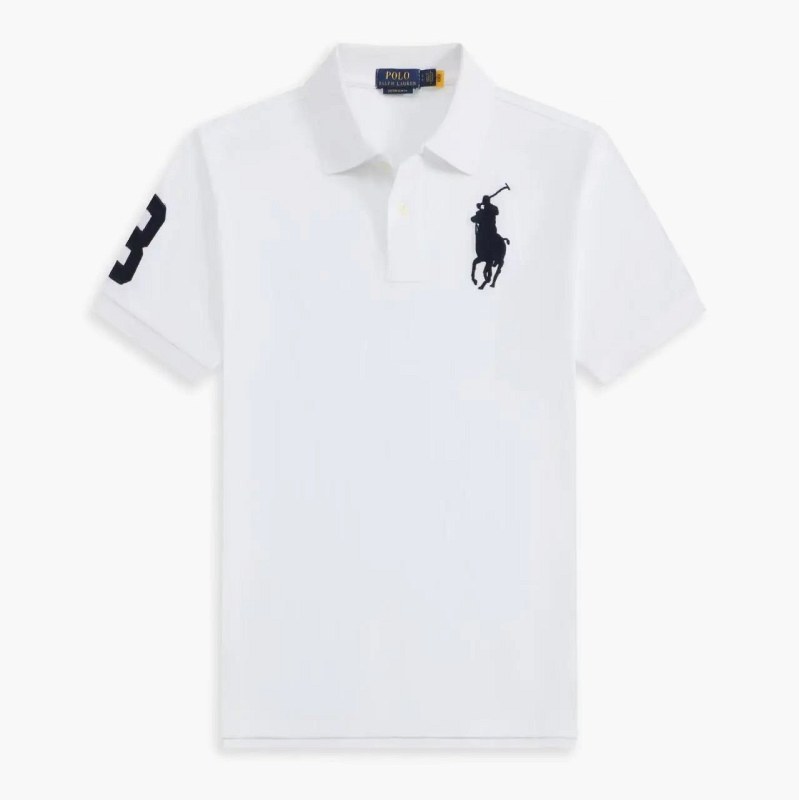
Most $15 polo listings fail on the obvious things: a collar that flops, a hem that twists, a logo that peels off after one wash. This one failed somewhere quieter. The product page for the Polo Ralph Lauren white polo shirt in casual streetwear style lists cotton as the main fabric component and polyester as the fabric name, in the same breath, at $15.37 against a $16.82 original. Nobody at the source factory fixed the contradiction, and it is the single detail that decides whether this shirt is worth the agent fees.
So we ordered a size L in white through the Kakobuy agent, logged the warehouse timing, and put it through the desk's usual protocol: measure flat, count stitches, inspect the embroidery under a light box, wear it, wash it, and compare the result against the listing's own photos.
What arrived, and what the listing did not tell us
The parcel reached the warehouse in four days and the agent's QC set matched the listing images closely enough that we approved the international leg without a second photo request. One practical note for anyone budgeting shipping: the catalog weight field reads 0.00, meaning the source publishes no weight at all. Our packed parcel weighed 0.31 kg on the lab scale, with the shirt itself at 187 g — light, but not so light that the fabric felt like tissue in hand.
The colorway list is genuinely wide: white, grey, red, wine, royal blue, and black with white, yellow, or red logo embroidery, sizes S through XXXL. What the listing does not do is separate those colorways by fabric or by fit line. Every variant inherits the same paragraph, including the cotton/polyester conflict.
Measured flat, size L
| Measurement | Our sample (size L) | Note |
|---|---|---|
| Chest, pit to pit | 21.0 in | 42 in around, consistent with a trim cut |
| Front body length | 27.75 in | Mid-hip on a 5 ft 10 in frame |
| Shoulder, seam to seam | 17.25 in | No drop shoulder |
| Sleeve from shoulder seam | 8.0 in | Ends mid-bicep |
| Placket length | 5.5 in | Two buttons, both functional |
Those numbers matter more than the size letter, because Ralph Lauren's own fit lines are not interchangeable. The brand's published guidance has described Slim Fit as roughly 1.5 inches trimmer at the chest than Classic, while other brand pages put the gap at about 3 inches — the figures shift depending on which product page you land on. Community sizing threads add another layer, noting that regular and classic cuts run one to two sizes larger than slim. This listing says only "fitted." Our sample measured like a slim cut, not a classic one, so if you want room through the waist, size up rather than trusting the label.
The fabric question, settled as far as we could settle it
We did not take the listing's word for it. From the inside of the hem we pulled a single loose thread, checked it against a control cotton thread, and ran a burn test over a metal tray. The sample melted into a small hard bead rather than collapsing into soft grey ash, with a faint chemical note under the burnt-cotton smell. A thread from the serged overlock behaved the same way. That is not a laboratory result and we are not presenting it as one, but it points to a cotton-polyester blend rather than the pure cotton the component field promises.
In wear, the blend story holds together. The shirt is thin enough to read a hand clearly through the white body in direct window light, though not enough to show skin tone at normal indoor lighting. It dries fast — noticeably faster than our all-cotton control polo — and it holds its shape off the line without ironing. A thin knit with a bit of polyester in it is exactly the profile the listing describes as breathable and machine washable, even if the copy cannot decide what it is made of.
The label argues with itself. The cloth behaves like a blend, and we would rather plan around that than around the component field.
Construction: seams, stitch count, and the sleeve patch
The side seams are overlocked cleanly with no loose tails, and the shoulder seams carry a strip of tape that kept them flat through every wash. Hem stitching ran at 11 stitches per inch on our count, even around the curve, with no skipped stitches or wandering needle marks. The collar is a two-piece turnover with a defined roll that survived the laundry; it creased slightly at the fold after the third wash and pressed out without shine.
The embroidered equestrian motif on the chest is dense and clean, with no backing visible through the white body and no thread pulls after five cycles. The contrasting patch on the right sleeve is the detail to inspect on arrival: ours was aligned well and stitched down at all four corners, but it is the kind of applied trim that is easy to place crookedly, and the listing photos show it at slightly different heights across colorways.
Five washes, twice-weekly wear
We wore it twice a week for a month and machine washed it cold five times, hanging it to dry each time. Length shrank about 0.25 inch and the chest about 0.125 inch — enough to notice in the mirror on the first wear after washing, not enough to change the size you should order. No pilling appeared at the underarms or where a backpack strap rubs. The white body stayed white, with a faint grey cast at the inside collar edge by wash five, which is ordinary for a white knit worn against skin. The sleeve patch corners stayed flat.
The one thing the shirt will not do is hide a fit mistake. The cut is close through the chest and short through the body, so a size chosen for a relaxed look will read tight rather than oversized.
Buying notes
The $15.37 price is the item price only; agent service fees and the international leg are billed separately, so budget above the sticker. Stock status showed in-stock at the time of our order, and the listing carried 28 reference photos — useful for comparing the white body against other colorways, less useful for checking the exact unit you will receive. Ask the agent for a chest measurement and a photo of the neck tag before the parcel leaves the warehouse. Counterfeit Ralph Lauren polos are common, and the widely cited tells are a small label on an oversized garment, mismatched pattern alignment at the seams, and inconsistent tags. Ours measured true to a slim L and the tags were consistent, but that check costs nothing and takes one message.
Sources and notes
-
Catalog product page
Product listing verified on 2026-10-19.
Frequently asked
Does the burn test prove the fabric is a cotton-poly blend?
No. A single hem thread melting to a hard bead rather than soft ash suggests synthetic content, but that is not lab-grade proof. Treat the listing's cotton and polyester claims as unresolved and ask the seller directly.
Should I size up in this polo?
Our size L measured 21 inches across the chest and 27.75 inches long, closer to a slim cut than a classic one. If you want room through the waist, go up one size and request a chest measurement first.
What should I check in the agent's QC photos?
Look at the right-sleeve patch alignment, the chest embroidery from the inside, and the neck tag. Counterfeit RL polos often show mismatched pattern alignment at the seams or a small label on an oversized body.