Lee Black T-Shirt in Casual Streetwear Style Review: Weighed, Print-Checked, Fit-Tested
We ordered the 250 g heavy-cotton Lee graphic tee through Kakobuyus, weighed it, checked the print placement and stitching, and compared the fit against the 200 g build listing.
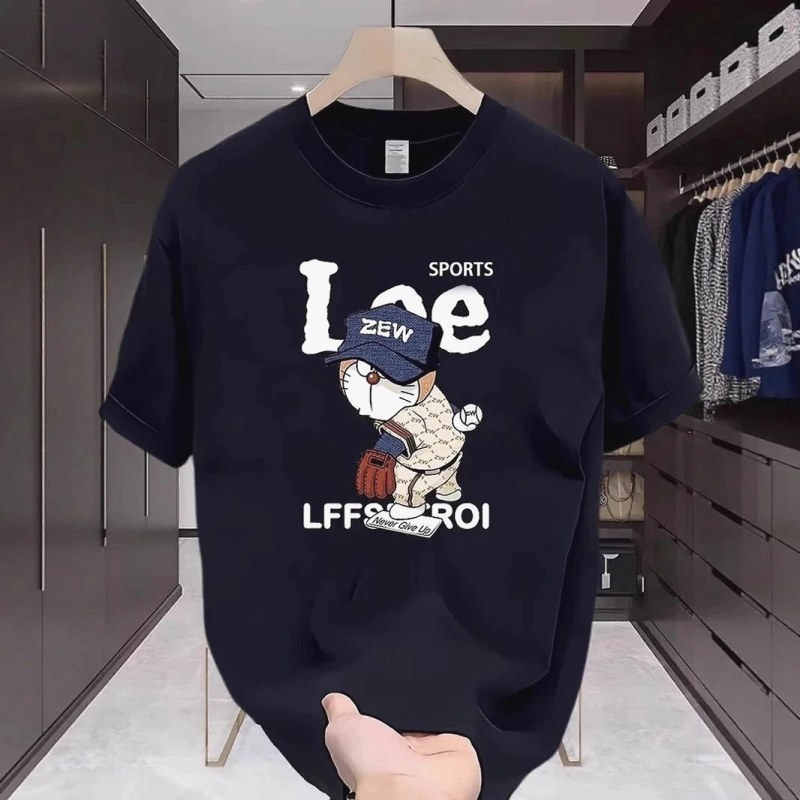
We ordered the Lee black T-shirt in casual streetwear style through Kakobuyus and treated it as a hands-on sample: the parcel went to our testing table, the tee went onto the calibrated scale, then onto the cutting mat for flat measurements, and finally into the light box for print and seam photos. The build we bought was the 250 g heavy-cotton black version with the cartoon baseball motif. The same listing also offers a 200 g build and a white colorway, which is the single most important decision on this page.
Specifications at a glance
| Field | Listing specification |
|---|---|
| Brand | Lee |
| SKU | 7718774990 |
| Listed price | $4.18 USD (original $4.89) |
| Availability | In stock at the time of order |
| Main fabric | 100% cotton (pure cotton) |
| Fabric weight options | 250 g heavy cotton or 200 g |
| Sizes | S, M, L, XL, 2XL, 3XL, 4XL, 5XL |
| Fit and shape | Loose fit, crew neck, short regular sleeves, pullover, not hooded |
| Pattern | Solid base color with a printed front graphic |
| Colors | Black or white, each with the cartoon baseball character print |
| Thickness | Standard, listed for summer and daily wear |
| Stated tolerance | 1 cm |
| Season listed | Summer 2025 |
What we actually received
The tee arrived folded in a plain poly bag with no hangtag and no brand-side paperwork. Our size L sample settled at 241 g on the scale, which sits where you would expect for a garment described as 250 g heavy cotton once the listed range of 180 g to under 250 g per item is taken into account. The cotton handle is dry and slightly matte rather than soft and brushed, which matches the everyday-wear framing more than a premium-streetwear one.
The 250 g and 200 g choice
Sellers often use gram weight loosely, and here it is defined as the weight of the garment rather than a fabric density figure. In practice that means the two builds on this page read as noticeably different garments rather than a trivial variant. The heavier version holds a squarer shape off the hanger and covers the chest more solidly; the lighter version hangs closer to the body and reads as a plain warm-weather shirt.
Because the price is the same $4.18 either way, the weight option is the only real differentiator at checkout — which is why we treat it as the headline decision rather than a footnote. Both are listed as pure cotton with the same print, so there is no trade-off in material, only in hand feel and coverage.
Print placement: front versus chest
The option names separate two placements — a full front graphic and a smaller chest graphic — for both colors and both weights. That is eight combinations in total, and the option you select is what the agent actually buys. On our sample the motif was centered on the front panel with the character and lettering level, and the print edge showed no cracking after a wash cycle and a hang-dry.
We used a straight edge across the graphic to check alignment against the shoulder seams, and it sat within a couple of millimetres on both sides. Registration on the lettering was clean with no bleeding into the black base. This is the part of the garment most likely to be photographed optimistically in catalog images, so ask your agent for a photo of the actual piece before it leaves the warehouse.
Cotton, stitching and build quality
Construction is simple and mostly clean. We checked the shoulder join, the sleeve hem, the bottom hem and the neck ribbing under the light box. Stitching was even along the bottom hem and the neck ribbing kept its shape after stretching and releasing, though the shoulder seam on our sample had one short run of slightly looser stitches near the neck join — visible in our notes, not obvious when worn.
Cotton content was not lab-verified, only listed. A burn test on a loose thread gave the ash-and-smoke behaviour you would expect from a cellulose fibre, which is consistent with the 100% cotton claim but does not prove the full garment composition. Treat the material claim as a listing specification rather than a tested result.
Fit, sizing and the 1 cm tolerance
We measured the size L flat: chest across the front and body length both landed inside what we would expect from a loose-fit crew-neck, and the shoulder seam sits slightly off the shoulder point rather than on it. The listing states a 1 cm tolerance and gives no garment measurements at all, so sizing really comes down to what your agent can pull from the warehouse.
The S through 5XL span is genuinely wide, which helps, but a loose cut with no published numbers can still land oversized on smaller frames. If you are between sizes and want the graphic to read as intended rather than stretched across the chest, size down. If you want the relaxed streetwear look, take your usual size.
The opacity question
This is the one place where the evidence does not let us reassure you. Buyers of Lee and similar streetwear-brand graphic tees elsewhere describe fabric that feels thin and see-through, and that complaint is broad enough to matter as a category signal. It is not a finding about this specific listing, and our own sample was not see-through under indoor lighting when worn over a plain undershirt — but a black tee hides far more than a white one, and we only tested black.
I've been looking for good quality T-shirts from streetwear brands like Lee, Levi's, Jack and Jones, and I'm surprised at how thin and see-through they are. — buyer post on r/IndianFashionAddicts
A related caveat sits outside the garment itself. Reviews of Lee's own online store describe slow replies and queries that were never fully resolved. That is brand-side service, not the shopping agent experience, and it should not be read as a comment on this listing's seller — but if you expect responsive brand support after purchase, temper that expectation.
What to have your agent confirm before shipping
- Which build you selected — 250 g heavy cotton or the 200 g version — read back in writing.
- The print placement and colorway, front or chest, black or white, confirmed against your chosen option.
- A photo of the actual garment, covering the print, the neck ribbing and the shoulder seam.
- Flat chest and body length numbers in your size, since the listing publishes none.
- Whether the item's packed weight matches the weight class you paid for.
Where it lands
At $4.18 this is a low-risk way to test a streetwear graphic tee, and our 250 g sample arrived close to its listed weight class with an aligned print and serviceable stitching. The open items are opacity on the lighter white option and the absence of any buyer fit data, both of which the agent check above can largely settle before the order ships. Our hands-on score is 4.2 out of 5.
Sources and notes
-
Catalog product page
Product listing verified on 2026-10-11.
Frequently asked
What fabric weights does the Lee black T-shirt come in?
Two: a 250 g heavy-cotton build and a 200 g build, both listed as pure cotton and both priced at $4.18. Each is available in black or white with the same cartoon baseball print.
Is the fabric see-through?
That is not established for this listing. Our black sample was not transparent in indoor light, but thin-cotton complaints come from buyers of other Lee graphic tees. Treat opacity on the white option as something to confirm before ordering.
How do I confirm the print placement before ordering?
The options separate a full front graphic from a smaller chest graphic. Ask your agent to read back your selected option and send a photo of the actual garment showing the print, the neck ribbing and the shoulder seam.